RESISTENSI ULAMA DAYAH ACEH TAMIANG TERHADAP HAK-HAK PEREMPUAN DALAM KHI
DOI:
https://doi.org/10.30821/miqot.v41i1.358Abstract
Abstrak: KHI menurut beberapa kalangan sebagai wujud pembaharuan hukum Islam di Indonesia yang juga diklaim sebagai hukum yang banyak membela hak-hak perempuan, sekalipun masih ada kalangan yang berpendapat sebaliknya. Tulisan ini mengkaji bagaimana respons Ulama Dayah Aceh Tamiang terhadap pemberlakuan Kompilasi Hukum Islam (KHI), khususnya yang terkait dengan hak-hak kaum perempuan yang diatur dalam masalah pencatatan nikah, keabsahan talak dan harta bersama. Tulisan ini berangkat dari penelitian yang dilakukan terhadap Ulama Dayah Aceh Tamiang dengan menggunakan metode interviu dan observasi. Ada tiga teori yang dipergunakan dalam menganalisis data penelitian ini, yakni; Teori Relasi Negara dan Agama, Teori Otoritas Ulama dan Negara, dan Teori Concervative Turn. Penulis menemukan bahwa penentangan Ulama Dayah terhadap KHI dapat diidentifikasi pada dua tingkatan. Pertama, mereka tidak sependapat dengan beberapa aspek dari KHI seperti; pendaftaran pernikahan, harta kekayaan bersama dan prosedur hukum perceraian. Kedua, secara faktual bahwa Ulama Dayah tidak sepenuhnya terlibat dalam proses penyusunan rancangan naskah KHI tersebut. Abstract: The Resistance of Ulama Dayah Aceh Tamiang Against Women’s Rights in Compilation of Islamic Law (KHI).This article provides the latest information on how the Ulama Dayah Aceh Tamiang's response to the implementation of the Compilation of Islamic Law (KHI), particularly related to women's rights regulated in the issue of marriage registration, the validity of divorce, and joint property. This paper is based on research conducted on Dayah Aceh Tamiang Ulama by using interview and observation method. There are three theories used in analyzing this research data, namely; theory of relations of state and religion, theory of ulama and state authority, and theory of conservative turn. The finding of this article reveals that the resistance of the Ulama Dayah against KHI can be identified in two levels. Firstly, they disagreed with some aspects of KHI in such as marriage registration, joint property, and divorce legal procedures. Secondly, the fact that Ulama Dayah were not involved in the process of legal drafting of the KHI. Kata Kunci: KHI, ulama dayah, hukum, keluarga, wanita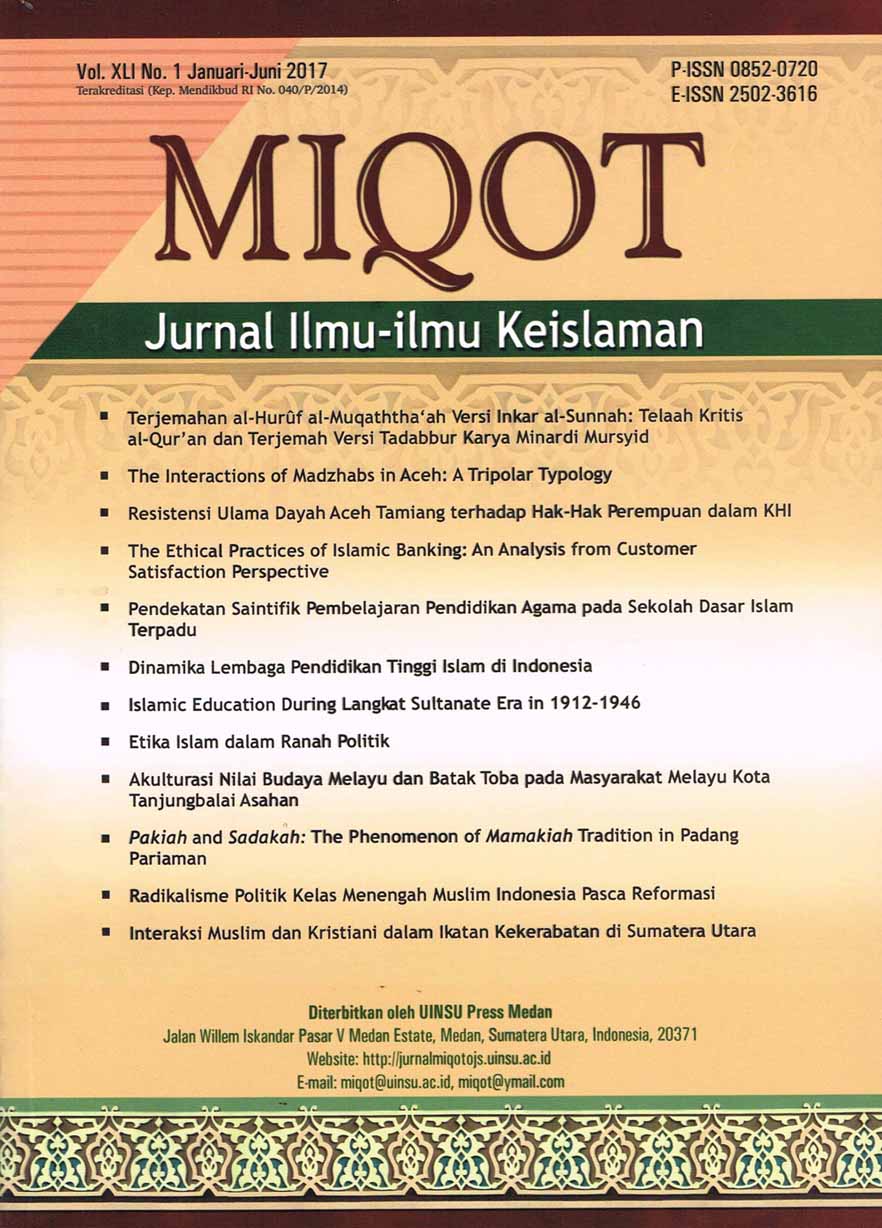
Downloads
Published
2017-12-20
Issue
Section
Articles
License
Authors who publish with this journal agree to the following terms:
- Authors are able to enter into separate, additional contractual arrangements for the non-exclusive distribution of the journal's published version of the work (e.g., post it to an institutional repository or publish it in a book), with an acknowledgement of its initial publication in this journal.
- Authors are permitted and encouraged to post their work online (e.g., in institutional repositories or on their website) prior to and during the submission process, as it can lead to productive exchanges, as well as earlier and greater citation of published work (See The Effect of Open Access).
MIQOT journal provides immediate open access to its content on the principle that making research freely available to the public supports a greater global exchange of knowledge. MIQOT journal Open Access articles are distributed under this CC BY SA.